
You're winning the wrong game.
You can stand at the top and still be on the wrong shelf. Criticism is data, not automatic hate. Showing up stays. The timetable does not.
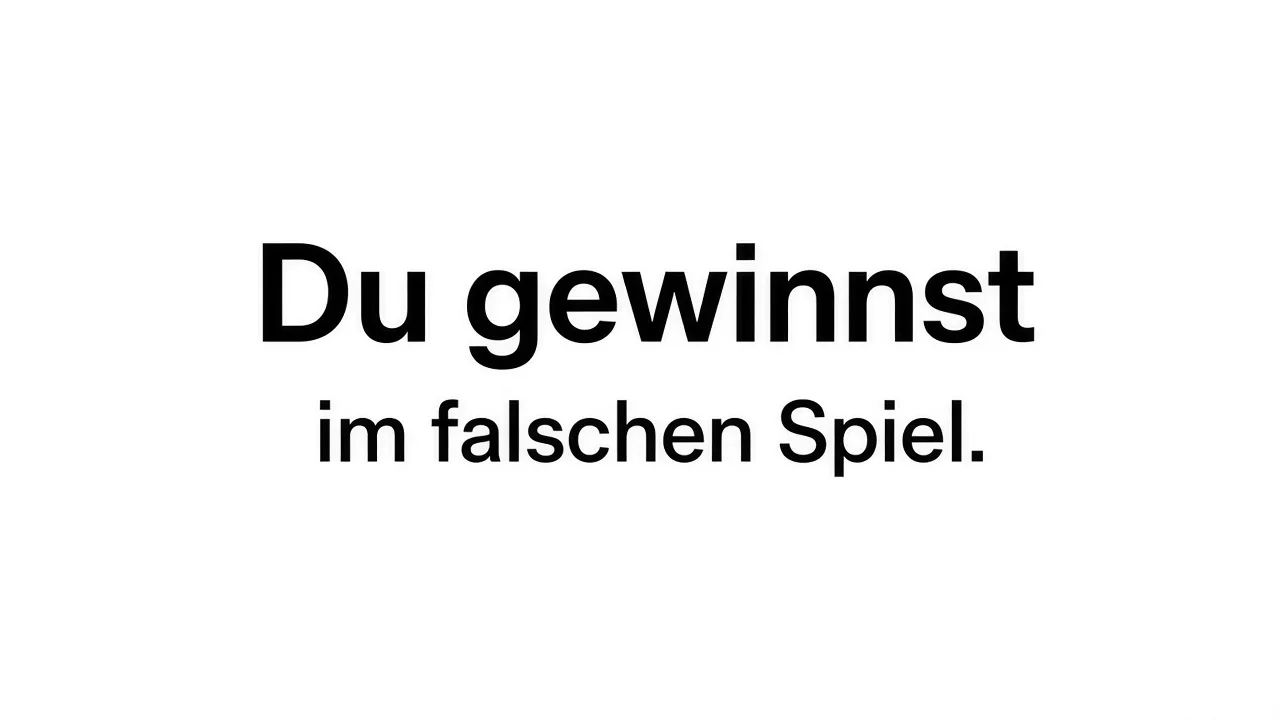
There is surely nothing quite so useless as doing with great efficiency what should not be done at all.
Peter F. Drucker, in substance. The usual German rendering is: nothing is as useless as doing, with great efficiency, what you should not be doing at all.
Key takeaways: You can win and still be in the wrong game. Not every criticism is hate. The useful part is a defect report. Showing up stays mandatory. The rigid timetable does not. The direction stays. The method changes when the numbers, the customers and your own resistance say the same thing.
You can stand at the top and still be on the wrong shelf. The balance is fine. The work is not. You call that discipline. Often it is the fear of leaving a category in which you are already visible.
One public pattern, without the dollar figures circulating online: someone built a business that forced him in front of a camera, and stepped out while it was still working. Then he built a product in which the users are on stage and he tightens the machine in the background. The revenues and user counts told about that switch contradict each other. You do not need them. The mechanism is enough.
Why is success in the wrong category still a loss?
Success measures whether the game is running. It does not measure whether it is your game. You can deliver for years, get paid, and perform a version of yourself. That is not a character flaw. That is a bad allocation.
The mask appears when the role misses both pleasure and direction. You talk into a camera you dislike. You play the type the industry expects. Customers say “fake”. You get angry. And part of you agrees. That part is not your enemy. It is the diagnosis.
Reaching the top and then asking whether it was the right category is not a betrayal of ambition. It is the first question worth asking once the bank balance no longer has to serve as the excuse. Before that, what is often missing is proof, buffer and nerve. After that, what is missing is honesty.
“I don’t care what other people think” is an expensive line once those people are your customers.
What in the criticism is data, and what is noise?
Not every criticism is hate. Hate attacks the person. Criticism names a friction. You sort it before you either fold or go deaf.
Three questions, or it stays theatre. Who is speaking: a customer, a spectator, a rival? What exactly is claimed, in one sentence, without your script? Does that sentence match what you already know when nobody is watching? If yes, the sentence is data. If no, it is noise. You delete noise. You change data.
The comfortable version is: haters hate. The expensive version is: I hate the role too, so the role has to go, not only the comment. How you refuse to give fear a veto while you do that is in Overcome Fear: Your Fear Has No Veto.
When does discipline turn into rigidity?
Showing up is the discipline that stays. You arrive at a fixed time and you work. What you do inside those hours is allowed to move. A plan that breaks the moment one bottleneck stops the rest is not a system. It is calendar cosmetics.
The direction does not change every week. Not the company. Not the product, on a whim. The nuance does: which queue goes first, which team is stuck, which method actually moves the bottleneck. If you own only a hammer, every result looks like a nail. That feels like focus. It is convenience. Repeating one method is easier than deciding.
Unpleasant work is not automatic proof that you are on the right road. Some of it hurts because the result requires it. Some of it hurts because you chose the wrong role. The difference is the metric. When the result and the resistance arrive together, the resistance is a signal. When only the resistance arrives, you keep measuring before you flee.
Loving the pain is not a strategy. It is an ideology for people who otherwise have no direction. You tolerate unavoidable friction. You cut avoidable self-hatred. If you want to build things that feel right to other people, you need a working sense of what they feel. You do not numb that with the line that pain is the proof.
What do you strip off before you build a brand?
A brand built on a mask is rent paid to an audience that will soon smell the mask. The layers come first. What you “like” because it is everywhere right now is often just the diet of your feed. You become similar to whatever you sit in for hours. Popularity is not taste.
Two filters, or you keep repeating other people. First: what do you want when nobody applauds and nobody warns you? Second: have you seen excellence up close, or are you treating your best week so far as the ceiling? If you have never seen a high level of execution, you confuse effort with standard. That is not a moral failure. That is a missing reference point.
Alfred Korzybski supplied the sentence most advice fails: the map is not the territory. A loud line on the internet is a map. Your case is the territory. Two capable people can claim the opposite and both deliver. The slogan is not the proof. Your fit, plus the result for the customer, is the proof.
On the 1966 tour Bob Dylan played acoustic first, then electric. The electric half was booed. He stayed with what he wanted to play, without ignoring the audience entirely: the familiar part first, then the change. Burnout often sits exactly in that gap. You hate what you have, and you cling to it because you are afraid of losing it. That is not courage. That is a cage with good utilisation. Who you become when you drop the mask is next door in Stand tall!
What stays mandatory when you change the method?
The switch is not a holiday from the craft. You show up. You do the arithmetic. You keep costs low enough that the decision does not die on the rent. Nerve without a number is romance. A number without nerve is another year in the wrong category.
The wide questions come before the details. Which segment. Which offer. Which result for the customer. Those decisions are expensive to reverse. Details on a wrong foundation are efficient waste. That is what Drucker means.
After that, only execution counts. Not the theory of execution. If you do not know whether it holds, you go into the situation and measure what happens. Reading often produces the next question. Doing produces a result. An earlier mistake stays a lesson, not an identity. On that, see Forget the Past!
The largest risk while you build is not a bad week. It is that you hate the work. Hate resigns faster than any crisis. So the question is operational, not soft: how do you produce the same result in a way you will repeat without lying to yourself? Find that way and the frequency goes up. Frequency beats the slogan.
Common questions
Is every criticism hate?
No. Hate attacks the person. Criticism names a friction. You check whether the sentence matches what you already know. Then it is data. Otherwise it is noise. You delete noise. You change data.
Do I have to suffer for success to count?
No. Unavoidable friction belongs to the craft. Avoidable self-hatred is a design flaw in the role. Loving pain is not a method. Showing up and clean work remain necessary even when the role fits.
May I change the method without betraying the goal?
Yes. The direction stays: segment, offer, result for the customer. The tactic changes when a bottleneck, a number or a justified criticism demands it. A new company every week is flight. The same tactic every week, against the number, is rigidity.
How do I know I am winning the wrong game?
The metric is fine, and you have to play someone you are not in order to hit it. Customers describe the mask, and you recognise it. Then the switch is not a mood. It is a correction of category.
Your task for today
Today, 45 minutes, once. Tomorrow morning you show up at the same time. The content of tomorrow stays a list, not a shrine. You do not measure the mood. You measure category, mask and one number.
- Category: Write one sentence: I am currently winning at ___, and it costs me ___.
- Mask: Name one task this week in which you play someone. One sentence, not an essay.
- Criticism: The last three accusations. Cross one out as noise. Keep one if you already agree with it in private.
- Direction: One goal that stays. One method you will change in the next seven days.
- Number: One metric: hours, output, rejections or money. If the number and the resistance agree, the switch is due. If only the feeling speaks, you measure for seven more days before you leave.
- Review: In the evening, one line: do you hate the work, or only the friction? Hatred of the work is the resignation risk. Friction is the price.
Efficiency in the wrong game is the most expensive kind of diligence.
More impulses
All posts →
Stand tall!
A slumped back is rarely only a back. Stand tall in body, mind and inner direction: stand, cut one thought, write one sentence.
Overcome Fear: Your Fear Has No Veto.
You want to wait until the fear is gone? Then a feeling holds the veto. Name it, check the risk and take the next step you can answer for.
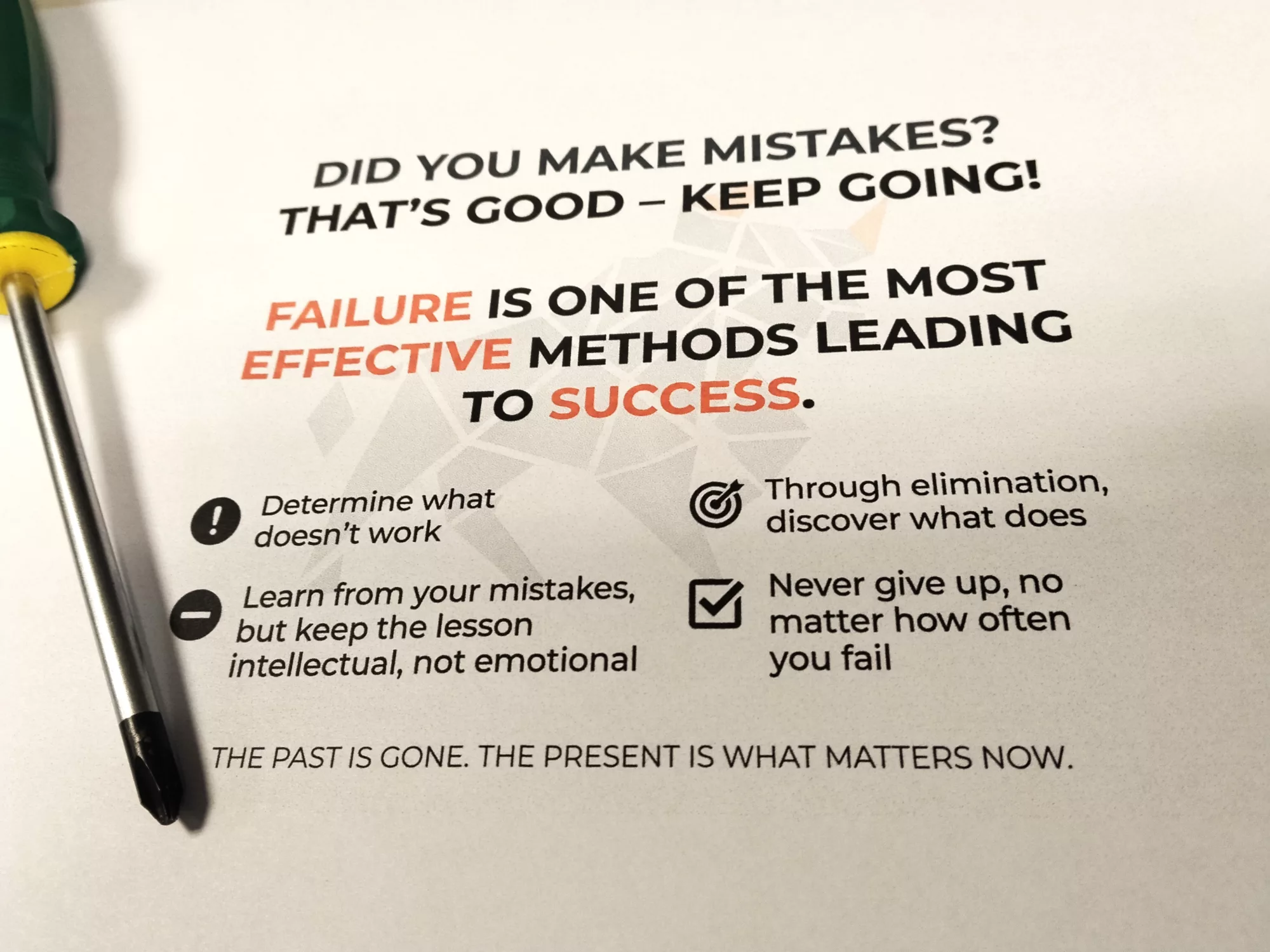
Forget the Past!
The past is gone. Mistakes are data, not verdicts: learn from them with your head, not your gut – and keep going in the present.